Rom 2,1-11 #2
In this section Paul begins by addressing the reader with a “you.” In the previous section he spoke about “them.” The first thing he says is that “you” have no excuse. In what follows he explains why.
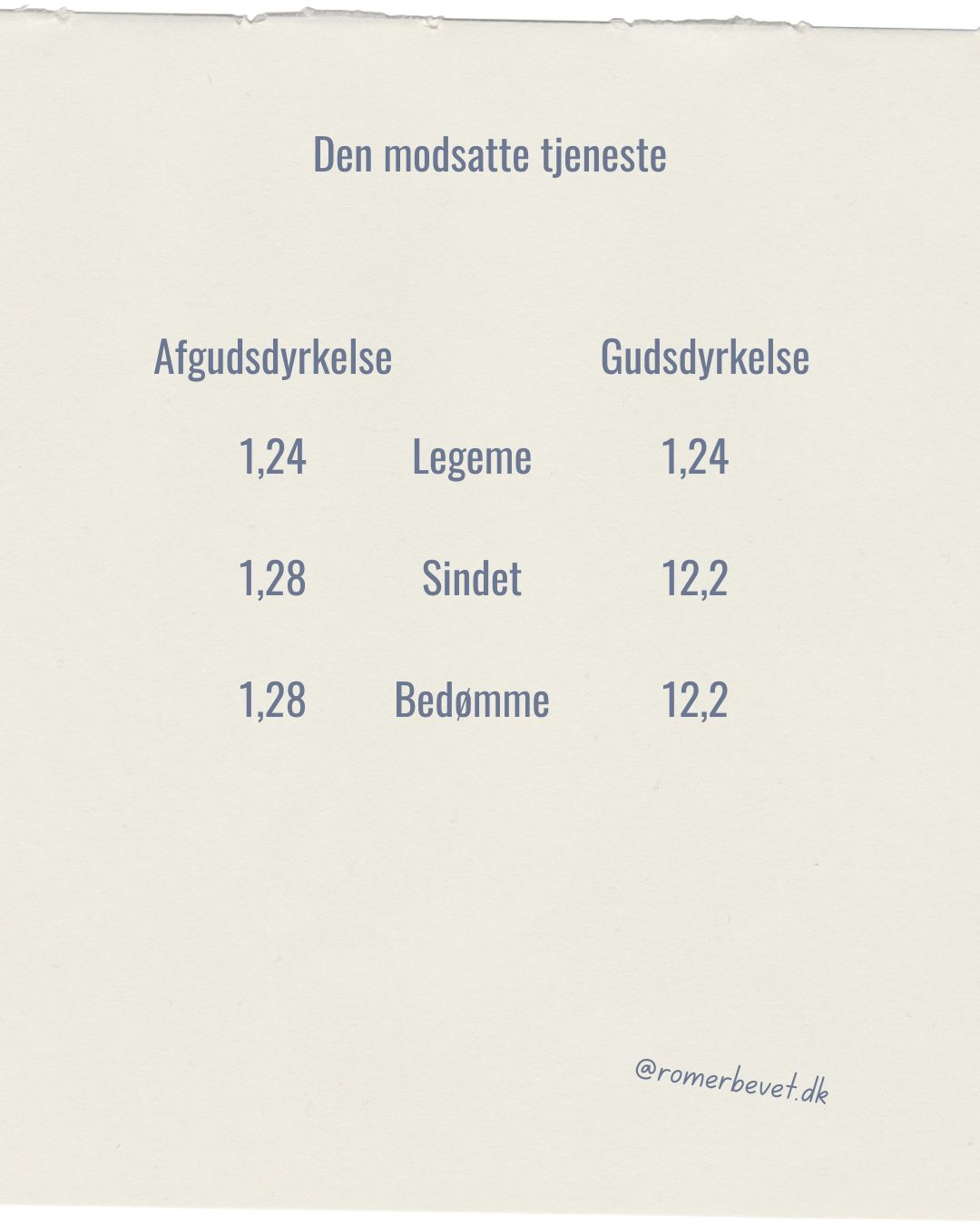
The first paragraph has two key words: to judge and to do. The Greek word for “to do” * is used both at the end of chapter one and at the beginning of chapter two. In this way the two sections are tied together.
Despite this similarity there is also a difference, at least on the surface.
- The person in chapter 2 judges sin
- The person in chapter 1 approves of sin
The main point of this section is that there is a tension between what the person says or thinks and what the person does.
Judgment and others — and yourself
The word “judgment” or “to judge” appears six times in the first three verses. This clearly shows what the focus is now.
Paul directs his attention toward the people who judge. Their problem is that they do “the same things.” With the expression “the same things” he points back to the preceding section.
When “you” do the same things, you are faced with a problem, as stated in verse 3: God’s judgment rightly falls on those who act in this way.
The Danish expression “med rette” (“rightly”) must here be understood as “in accordance with the truth.” In this way Paul reaches back to an expression from chapter 1, where people suppressed the truth (1:18).
Naivety and contempt
Paul accuses the person he is speaking to of despising God’s goodness, forbearance, and patience.
But how has the person experienced God’s goodness? In light of chapter one, it is clear: The person has not experienced God’s judgment in the same way. This might lead him to think that he does not have a problem.
Paul rejects this clearly: It is an expression of God having shown him goodness and forbearance.
Patience is expressed in the fact that God does not intervene here and now.
In Exodus 34:6 God says about himself that he is “slow to anger.” The Greek translation uses the same expression that Paul uses here.
In Jeremiah 15:15 there is an example of this point. Here Jeremiah asks to be delivered from his enemies and then says: “do not drag it out” *
You are storing up wrath for yourself
Verses four and five describe two opposing realities: God aims to lead to repentance, but the human being “stores up wrath” for himself.
The challenge is “the hard and unrepentant heart.” In chapter one the heart was darkened and foolish. Here it is “hard and unrepentant.”
This means that the human being does not understand that God’s goal is “to lead to repentance.”
When the human being does not repent, he stores up “wrath for the day of wrath.” In the Greek version of the Old Testament the expression is used several times.
*